Dubai’s $10M+ Home Sales Hit a New Record in 2025 — What It Signals for Luxury Pricing in 2026
Dubai $10M+ home sales record 2025 is now the clearest indicator of how strong ultra-prime demand has become in the city. In 2025, Dubai recorded 500 residential sales above $10 million, with total value reaching $9.05 billion, according to a Knight Frank update published on January 12, 2026.
This matters for luxury buyers because the Dubai $10M+ home sales record 2025 isn’t just a headline figure — it shapes pricing psychology, seller expectations, and where trophy inventory will be positioned in 2026.
But the bigger question for investors, developers, and buyers is what this record means next: will it translate into higher prices in 2026, or is the market heading toward a more selective phase?
The record, by the numbers
Knight Frank’s figures point to a market that didn’t just hold up—it accelerated into year-end:
500 homes sold above $10m in 2025 (record)
$9.05bn total value of $10m+ transactions in 2025 (+27.7% YoY)
68 deals were above $25m (a strong signal that “trophy” demand widened, not just $10m threshold activity)
143 deals in Q4 2025 alone (a late-year surge)
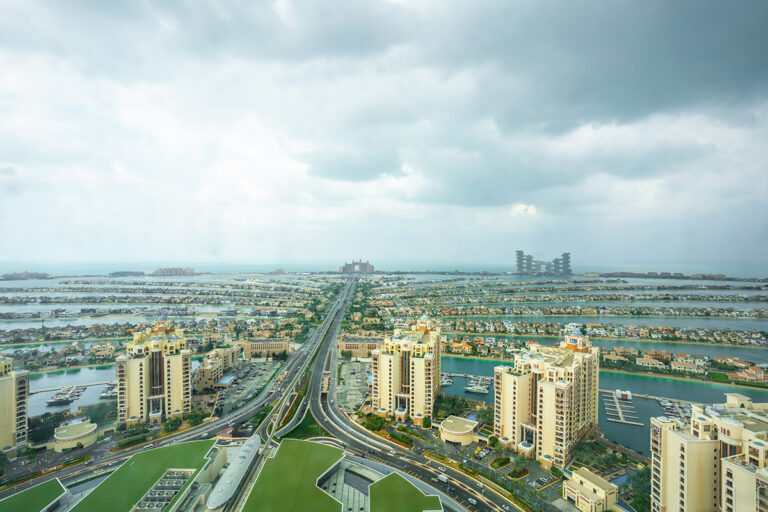
In terms of where buyers concentrated, reported Q4 data shows Palm Jumeirah and Palm Jebel Ali leading the $10m+ segment (with other premium communities also contributing).
What’s really driving $10m+ demand in Dubai
This 2025 record isn’t only about headline sales volume—it’s about why high-net-worth buyers keep choosing Dubai for primary and secondary homes.
1) “Lifestyle infrastructure” is now part of the price
Dubai’s luxury market sells an ecosystem: five-star hospitality, private beach living, dining, retail, marinas, and ease of connectivity. That’s why established waterfront and resort-style communities still absorb premium pricing even when broader markets cool.
2) The trophy buyer base is broader than before
The fact that 68 transactions exceeded $25m suggests demand moved beyond “upper luxury” into true ultra-wealthy territory—buyers who are less rate-sensitive and more motivated by security, lifestyle, and long-term capital allocation.
3) Supply exists, but the right supply stays scarce
Dubai can deliver new inventory quickly, but at $10m+ levels, buyers typically pay for scarcity: water frontage, iconic views, privacy, and brand equity. In many global cities, the bottleneck is “no new land.” In Dubai, the bottleneck is “limited best-in-class plots and positions.”

What this signals for luxury pricing in 2026
The 2025 record strongly supports the case for pricing resilience at the very top end, but it doesn’t guarantee a broad-based price surge across all prime and near-prime stock.
Here’s how to think about 2026.
Signal 1: The “best addresses” can still reprice upward
With Palm-led demand repeatedly topping the charts, the most defensible segment for 2026 is likely:
beachfront villas and rare waterfront plots
limited-edition penthouses with landmark views
ultra-prime assets inside communities that have proven global pull
Implication: In these micro-markets, pricing can keep grinding higher because buyers aren’t comparing Dubai to nearby neighborhoods—they’re comparing it to Monaco, London, and prime coastal U.S. markets.
Signal 2: A more selective 2026 is possible if supply ramps up
Not everyone is calling “straight up.” Fitch, cited in a May 2025 Reuters report, warned that Dubai prices could face a double-digit decline into 2026 due to rising supply (with large unit deliveries projected).
Implication: If supply lands as projected, the market could split:
Ultra-prime trophy stays firm (or rises modestly)
Prime and mid-prime becomes more negotiable
developers compete harder on payment plans and incentives
Signal 3: Ultra-prime activity itself becomes a confidence indicator
When the number of $10m+ deals is high, it acts like a “sentiment index” for the luxury ecosystem: private banking confidence, cross-border mobility, and the city’s continued attractiveness to wealth.
Implication: If 2026 quarterly $10m+ volumes stay elevated, it supports price floors at the top even if the wider market normalizes.
Where to watch in 2026: three “pricing levers”
1) Product type: branded and curated lifestyle inventory
Ultra-prime demand tends to follow product with a clear identity—privacy, service, and “arrival value.” Watch segments that pair real estate with hospitality-grade living.
2) Infrastructure upgrades that push footfall + prestige
Luxury pricing doesn’t move only because of GDP. It moves when the city reshapes access and experience. Recent major infrastructure and retail development announcements around Dubai’s core lifestyle zones also reinforce the long-term bet on premium districts.
3) Global capital conditions
Even trophy buyers react to macro sentiment: equity markets, crypto liquidity, geopolitical risk, and how attractive Dubai remains versus other tax and lifestyle hubs.
The takeaway for luxury buyers and investors
Dubai’s 2025 $10m+ record—500 transactions and $9.05bn in value—shows that the emirate is no longer “just a hot cycle.” It’s operating like a mature ultra-prime market with sustained global demand, especially in the best waterfront and trophy segments.