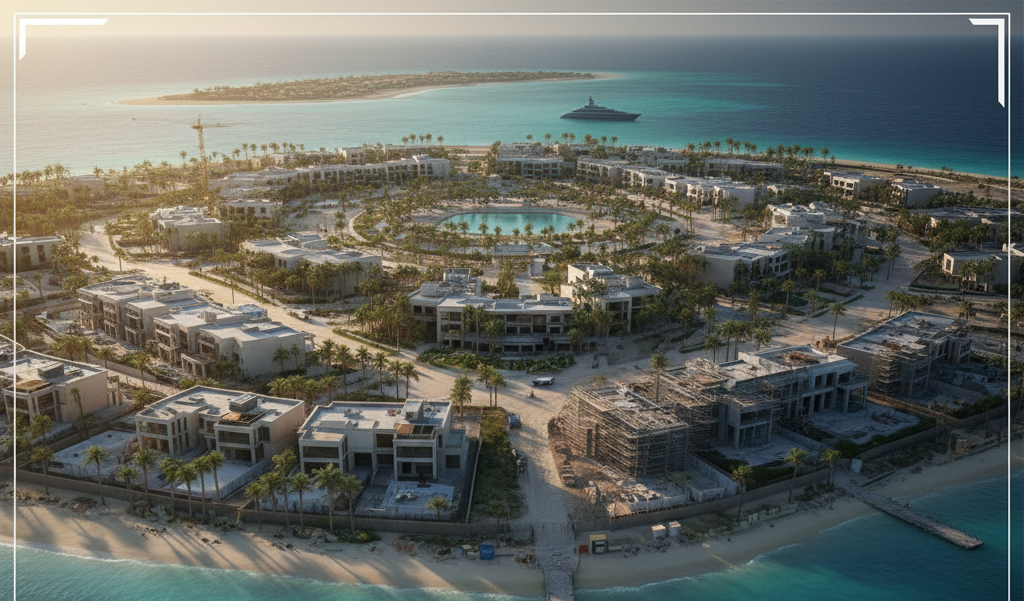
Sindalah was positioned as NEOM’s first “physical showcase” on the Red Sea: a luxury island meant to demonstrate progress, host high-end guests, and help anchor Saudi Arabia’s premium tourism narrative. In late 2024, NEOM publicly marked Sindalah’s unveiling as a milestone.
But reporting since then has painted a more complicated operational picture — and it’s led to a significant governance move: Saudi Arabia plans to transfer management of Sindalah from NEOM to Red Sea Global (RSG), with both entities sitting under the Public Investment Fund (PIF).
What happened: the factual timeline so far
October 27, 2024: NEOM announced that its Board of Directors “showcased” the opening/unveiling of Sindalah, framing it as a major milestone and “the first physical showcase of NEOM.”
Early 2024 (planned) → missed: The Financial Times reported that Sindalah failed to open to the public as planned in early 2024.
October 2024 (soft launch): The same FT report said Sindalah had a soft launch in October 2024 but had yet to begin full operations at the time of reporting.
September 2025 (reported management shift): FT reported that Saudi Arabia planned to transfer management of Sindalah from NEOM to Red Sea Global, after delays and leadership changes.
What “management shift” means in practical terms
On paper, Sindalah remains a luxury island destination within the broader NEOM vision — a resort-led development described by NEOM as a global yachting hub, with hospitality and lifestyle components.
What changes is who is responsible for operating delivery and day-to-day readiness (the management function), moving from NEOM to Red Sea Global, which has been developing and operating other Saudi tourism destinations on the Red Sea.
Why the switch happened (what is actually reported)
FT tied the move to two linked realities:
Delays and a missed public opening timeline (early 2024).
Leadership change and a wider review at NEOM, after the island’s soft launch; FT reported NEOM’s CEO Nadhmi al-Nasr was removed after the soft launch, and that Aiman al-Mudaifer began a comprehensive review.
FT also described Sindalah as a high-end resort with a yacht marina and golf club, underlining the kind of complex, service-heavy asset where operational execution matters as much as construction.
What it signals about execution in luxury destinations
This isn’t about branding — it’s about delivery risk.
Luxury destinations are unforgiving when it comes to timelines because delays ripple through multiple layers at once: hotel openings, marina operations, retail leasing, staff housing, supplier contracts, and air/sea access. What the Sindalah handover highlights is a shift toward putting operational accountability with an operator/developer that is already running comparable tourism assets. FT explicitly framed RSG as “better suited” to manage Sindalah based on its track record with tourism ventures.
What it signals about “operator risk” for partners and investors
Operator risk in a project like Sindalah doesn’t only mean “will guests come?” It often means:
Will the destination open when announced — and to full operations, not just a showcase event?
FT’s distinction between a soft launch and full operations is key here.Will governance change mid-stream if timelines slip?
The reported move from NEOM to RSG is exactly that kind of governance reset.Will the delivery model concentrate execution under one entity with tighter control?
Reuters has described RSG’s model as keeping substantial delivery control in-house and scaling rapidly across Red Sea hospitality projects — a factor often associated with tighter execution management (though outcomes still depend on real-world delivery).
The wider context: a tighter focus on “what can be delivered”
FT has separately reported that NEOM underwent a broader review after setbacks, with a focus on reassessing scope and governance.
In that environment, shifting Sindalah management to a tourism operator with an established delivery pipeline functions as a de-risking step — not a guarantee, but a signal about priorities: make assets operational, then scale.
The Sindalah management shift is best understood as an execution story.
NEOM publicly showcased Sindalah’s unveiling in October 2024.
Reporting later described a missed early 2024 public opening timeline, a soft launch in October 2024, and full operations not yet underway at the time of FT’s report.
Saudi Arabia then moved toward transferring management to Red Sea Global, another PIF entity with a track record operating luxury tourism projects.
For luxury destination watchers, the message is straightforward: in giga-project tourism, operational readiness is the real milestone — and when it slips, governance and operators can change fast.