A Late Modernist Revisited: A New Exhibition Reframes Chafik Charobim Through Art, Archive, and Method
Late Painter Chafik Charobim is being revisited in a new exhibition that reframes his work through paintings, photographic references, and studio archival material.
A new retrospective exhibition is revisiting the work of Chafik Charobim (1894–1975) with a structure that does more than celebrate the paintings. It places the artist under a clearer lens—showing the finished works alongside the private tools, references, and studio materials that shaped them, and using that contrast to both commemorate and critically re-read his practice.
Titled “Chafik Charobim (1894–1975): Lightmarks on Vanishing Points,” the exhibition is presented at the Margo Veillon Gallery of Modern Egyptian Art at AUC Tahrir (Tahrir Cultural Centre). It runs from December 7 to December 29, 2025, and is framed as a marker of 50 years since the artist’s passing.
More than a retrospective: the archive is part of the argument
The exhibition uses the legacy of the Late Painter Chafik Charobim to explore how observation, photography, and painterly reconstruction shaped his visual language.
The exhibition’s key move is that it doesn’t treat Charobim’s paintings as isolated objects. It places them in conversation with the mechanisms of looking that informed his work—especially his relationship with photography.
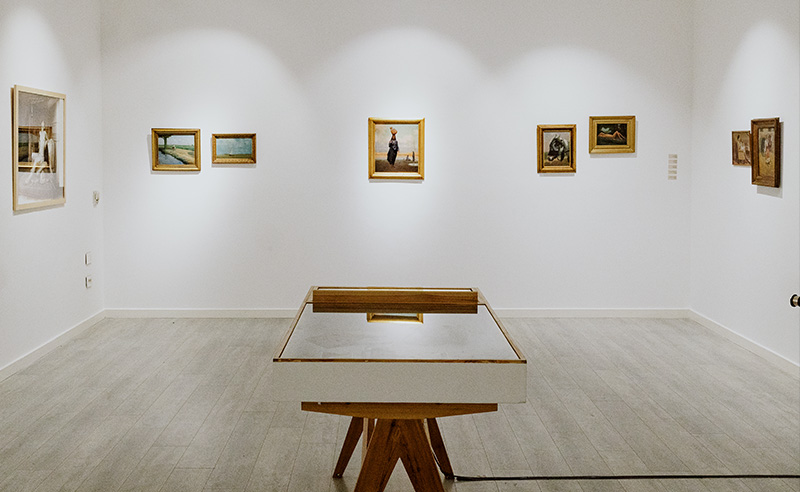
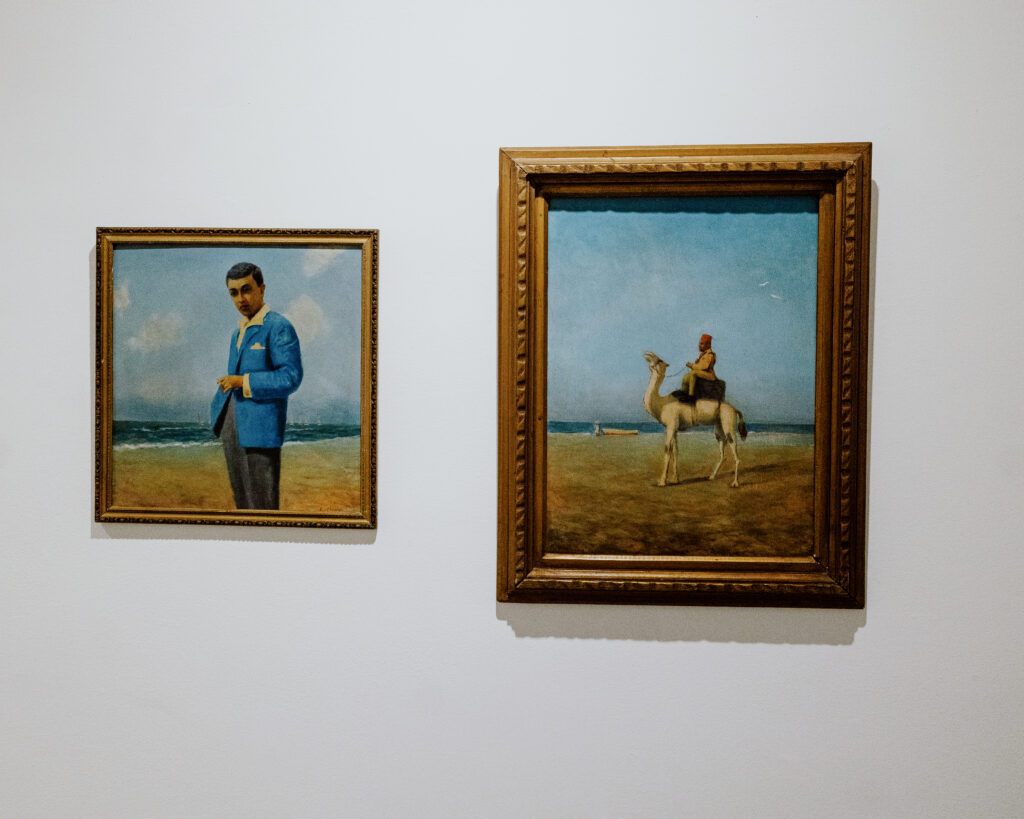
On view are 50 oil paintings, accompanied by special-edition photographic prints and selections from the artist’s studio archive, some of which are presented publicly for the first time. That archive element is not decorative: it is used to underline a central theme described by the organisers as the shifting boundary between mechanical sight and painterly expression—how images captured by a camera can become raw material for a painting, and how a painting can then depart from the photo to construct something more composed, more idealised, or more emotionally edited.
What visitors actually see beyond the canvases
Alongside the artworks, the exhibition includes glass displays containing personal and working materials that clarify how Charobim built his images. These include items such as the cameras and magnifying tools he used, a journal where he kept newspaper clippings about his work, and photographs of people and places that served as references for paintings.
That choice matters because it changes the viewing experience. Instead of standing in front of a landscape and reading it only as atmosphere, the viewer is also given the chance to understand the decisions behind it: what was observed, what was selected, what was removed, and what was reassembled.
A painter associated with realism — shown through a more complex process
Charobim is often described in connection with realist landscapes and scenes of daily life in Egypt. This exhibition complicates that label without dismissing it. It highlights how his realism was frequently built through photographic accumulation, then transformed through painting into scenes that could be more orderly, more luminous, or more narratively “complete” than everyday reality tends to be.
In that sense, the show doesn’t ask visitors to choose between “documentary” and “artistic.” It argues that the tension between the two—between a camera’s record and a painter’s reconstruction—was a defining feature of the work.
Why the timing matters
The exhibition is explicitly tied to an anniversary—50 years since Charobim’s death—but the framing presented in official listings and coverage suggests the anniversary is treated less as a ceremonial marker and more as an opening to reassess the work with stronger context.
By bringing the studio archive into the public space, the exhibition shifts attention from biography to method: how the work was made, what tools and references were involved, and how the paintings relate to a broader history of modern Egyptian art that often sits between European training, local subject matter, and evolving technologies of image-making.
The exhibition as both commemoration and critique
The “commemorated” part is clear: a retrospective scale, a major institutional venue, and a structured presentation that marks the artist’s legacy.
The “critiqued” part is quieter but more interesting. It’s in the curatorial structure itself: the insistence on showing process, the decision to foreground the archive, and the implied question running through the galleries—what does it mean to paint reality when reality is first filtered through a camera, a lens, a crop, a file, a reference wall?
For visitors, that produces a more precise encounter with the work: not only what is seen on the canvas, but how that seeing was built.