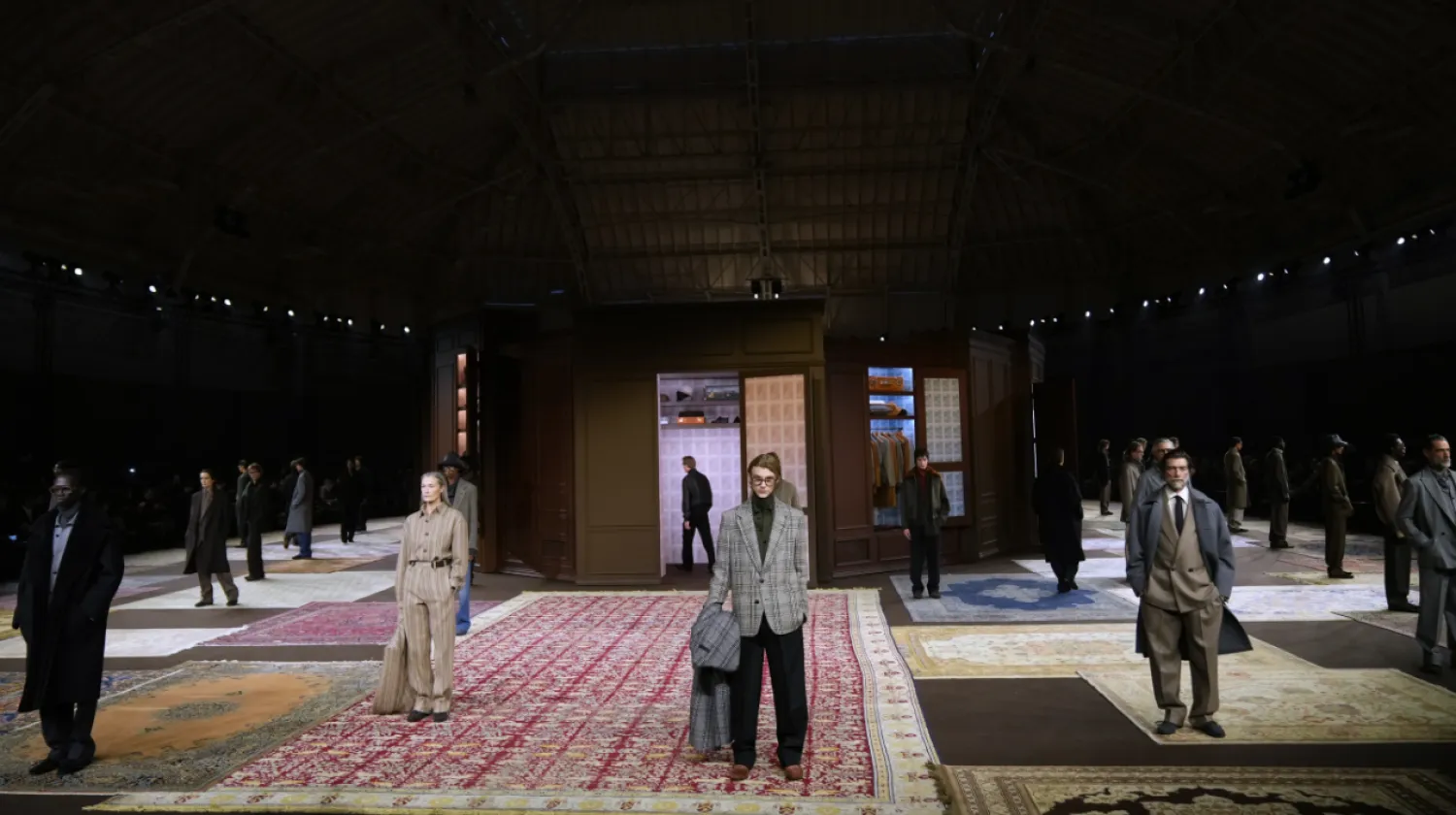
Milan Menswear’s Next-Winter Mood: 5 Runway Buzzwords Everyone Kept Repeating
Milan Fashion Week menswear didn’t just preview next winter’s wardrobe — it previewed the mood of the season, from Olympic-coded energy to Prada’s sharp minimalism and the wider conversations shaping the runway.
Across Milan Fashion Week menswear, the talk wasn’t only about silhouettes — it was also about sustainability, legacy, jewelry, and representation.The Olympic spirit didn’t just appear in Milan this week — it threaded itself through the entire menswear conversation. From Dsquared2’s cheeky nod to the Winter Games, to Emporio Armani’s in-store parade of Team Italia uniforms, to Ralph Lauren’s celebrity-filled show — heavy on ski-resort energy as the brand prepares to outfit Team USA — Milan Fashion Week ended with sport, symbolism, and winter optimism woven into the clothes.
Fashion, as it usually does, mirrored the wider world. The front-row talk wasn’t only about silhouettes (notably streamlined at Prada) or the kind of accessories that stop you mid-sentence (Dsquared2’s inventive winter footwear got plenty of that). The conversation spilled into bigger themes — sustainability, legacy, and who gets represented when the lights come on.
Here are five runway “buzzwords” that defined four days of mostly menswear previews for Fall–Winter 2026–27.
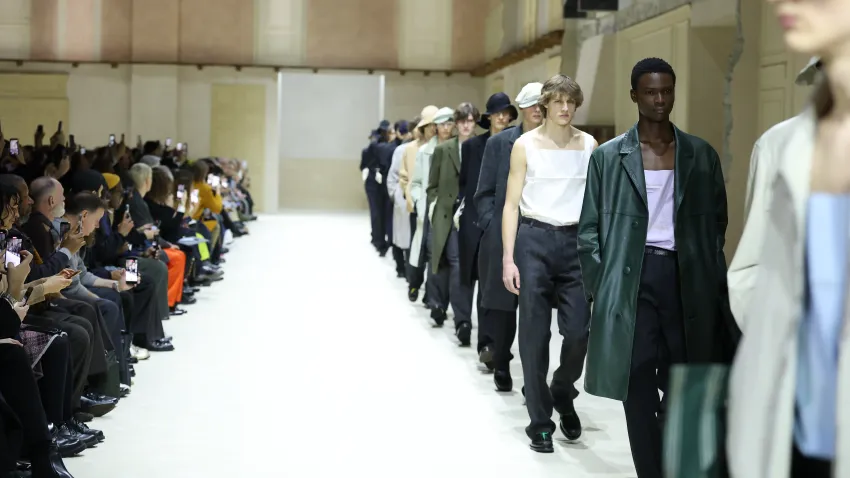
Olympic Spirit
If one idea kept resurfacing, it was winter sports — not just as a styling reference, but as a cultural mood.
Dsquared2, founded by Canadian twins Dean and Dan Caten, delivered the most playful interpretation: an intentionally ironic tribute that made the case (with a wink) for why they would’ve been a very entertaining choice to outfit Team Canada for the Winter Games. The show opened with fellow Canadian Hudson Williams, the actor starring in the buzzy hockey romance series “Heated Rivalry,” walking down a fake snow-covered staircase in ripped double denim and a sparkly racing look.
Footwear became part of the spectacle. The brand pushed winter shoes into hybrid territory — designs that land somewhere between a sleek dress silhouette and a snow boot — and it became one of the most talked-about accessories of the week. The Olympic references were unmistakable, but delivered with the label’s usual irreverence, while still mindful of the strict protections around Olympic branding.
Elsewhere, the Olympic temperature stayed high. Ralph Lauren approached winter sport with a more patrician polish inside a Milan palazzo — layered knits, fleece, puffers and flannel that leaned into the brand’s heritage-coded comfort — shown to a tightly packed celebrity crowd that included Nick Jonas, Tom Hiddleston, and Noah Schnapp. The effect was less “performance gear” and more “ski lodge fantasy,” but the message was the same: winter is coming, and fashion is ready to dress for it.
Hats Off
Sometimes a season’s mood isn’t announced by a silhouette — it’s introduced by an object. In Prada’s case, it was headwear.
Co-creative directors Miuccia Prada and Raf Simons explored men’s hats in a way that felt both playful and highly engineered: berets and fedoras made foldable — almost origami-like — then designed to snap onto the back of outerwear when flattened. It wasn’t an accessory moment; it was an idea about practicality, memory, and how men might carry elegance through a day.
Prada’s runway details reinforced that sense of invention. A modular cape layered over coats and jackets, designed to add protection and utility. Dress shirts that looked familiar from the front, then revealed surprises — T-shirt necklines and closures that buttoned down the back. Cuffs that were deliberately long, worn protruding from sleeves like punctuation.
And yes, the ultra-slim car-coat silhouette sparked chatter. Prada’s response was unapologetic: the point wasn’t to quiet the conversation — it was to start it.
Legacy
If one word felt heavier than trend forecasting, it was “legacy.” Milan this season wasn’t only selling a look — it was selling continuity.
At Zegna, creative director Alessandro Sartori framed the collection around wardrobe building over time — pieces intended to endure, aligned with the fashion house’s long family story. The jacket story summed it up: a longer, more voluminous shape with square shoulders, built around a distinct configuration of three horizontal buttons, designed to shift between single-breasted, double-breasted, or a more casual closure through a clever mechanism that changes how it fastens.
Sartori described the customer as a collector — someone who collects clothes the way people collect watches. To underline the idea of longevity, Zegna displayed behind glass a nearly century-old jacket made with the company’s own fabrics. The brand has also highlighted how it controls about 60% of its supply chain, a detail that stood out as other Italian brands have faced scrutiny around supply-chain practices.
Heirloom
Jewelry is no longer an afterthought in menswear. This season, it was a statement — not only about style, but about identity.
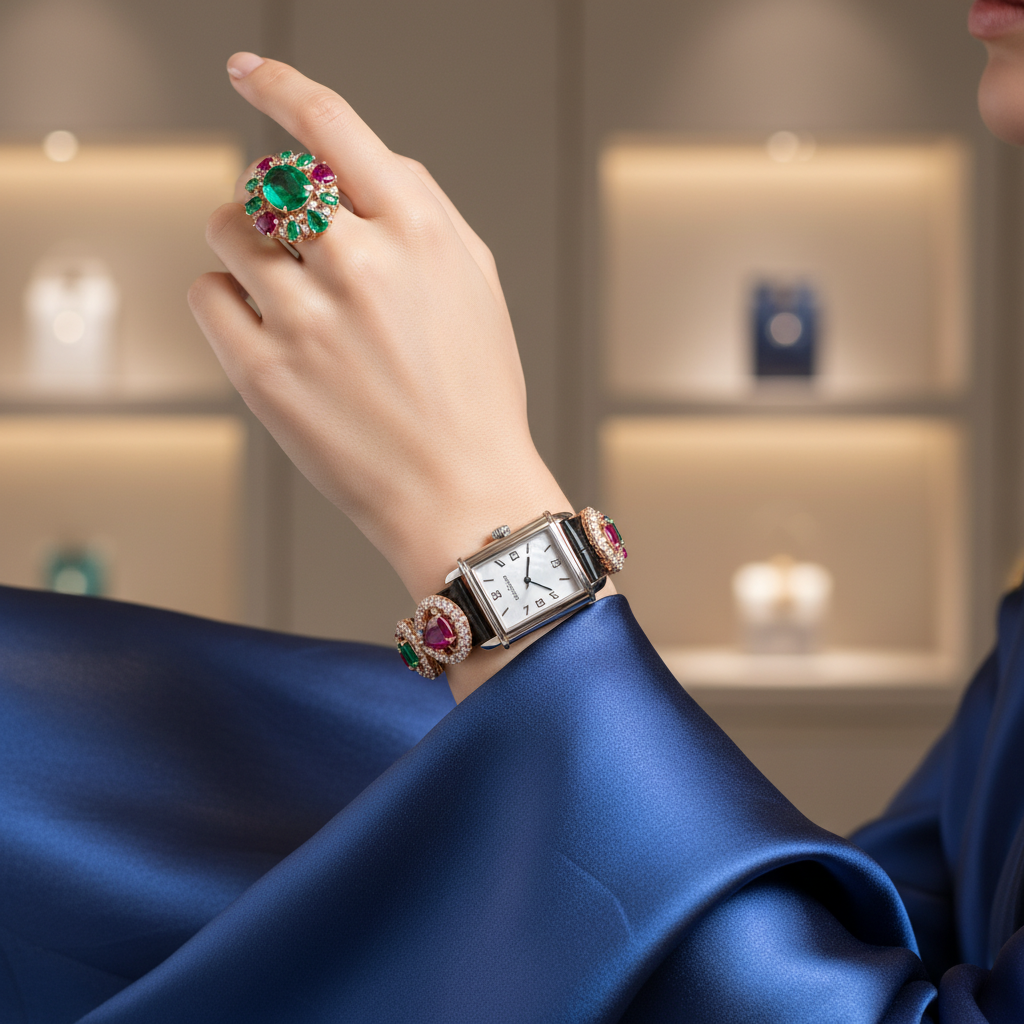
Dolce & Gabbana pushed evening dressing into a more ornate territory: lapel jewels that looked like modern heirlooms — big floral pins, elaborate gold brooches embedded with watches, and long elegant chains that felt designed to be kept, not discarded. Giorgio Armani offered the quieter counterpoint, adding subtle lapel pins that read like restrained signatures rather than spectacle.
At Prada, jewelry surfaced through detail: gemstone cufflinks — including stones like lapis lazuli and tiger’s eye — fastening those exaggerated cuffs, and sculptural mismatched earrings finishing off the looks. The common thread across the week was clear: men’s jewelry isn’t “extra” anymore. It’s part of the wardrobe architecture.
And then there was the conversation that always matters more than styling: who is seen, and who isn’t.
Ghanaian designer Victor Hart made his Milan runway debut supported by the Afrofashion Association, presenting statuesque denim looks with street-level touches like industrial belting. The moment also reopened a wider discussion about Milan’s diversity arc — the burst of momentum after 2020, and the sense among many observers that it has cooled since then.
Casting, critics noted, is often the easiest (and sometimes most performative) way to signal inclusion — and yet brands still fall short. Dolce & Gabbana was called out on social media for an all-white model cast at its menswear show, including comments from fashion voices online.