In a move that has sent ripples through the upper echelons of French fashion, Chanel has formally acquired Charvet, the storied Place Vendôme shirtmaker widely regarded as the world’s first dedicated purveyor of bespoke shirting. The announcement, made this July, brings 188 years of independent history under the Chanel roof and with it, one of the most quietly revered names in menswear.
Founded in 1838 by Joseph Christophe Charvet, whose father served as wardrobe curator to Napoleon I, the maison has occupied its address at 28 Place Vendôme since 1877. Its client roster over nearly two centuries reads like a who’s who of European letters and power: Charles Baudelaire, Marcel Proust, Winston Churchill, and Jean Cocteau all turned to Charvet for shirts cut with singular precision. Every piece continues to be produced in a single atelier in Saint-Gaultier, in the Indre department, a detail that only deepens the house’s mystique among connoisseurs who prize scarcity as much as skill.
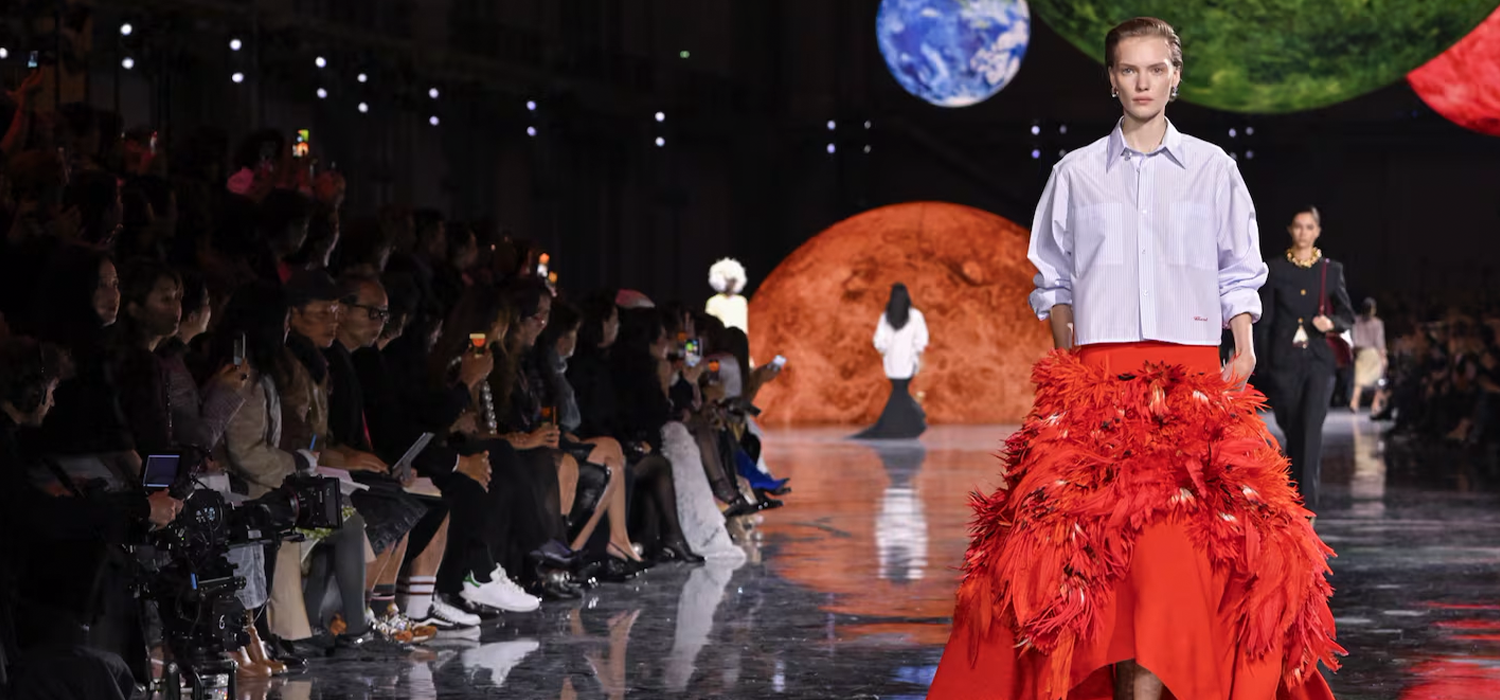
The path to acquisition began organically rather than strategically. During the development of his debut ready-to-wear collection for Chanel, creative director Matthieu Blazy struck up a rapport with siblings Anne-Marie and Jean-Claude Colban, who have overseen Charvet since their father purchased the house in the 1960s. Their collaboration produced a trio of oversized cotton shirts, finished with a Chanel chain at the hem, that became instant It-pieces of the Spring/Summer 2026 season, seen on Nicole Kidman, Jessie Buckley, and Jacob Elordi, and later carried through into Blazy’s resort collection in Biarritz. What began as a creative dialogue evolved, naturally, into a conversation about permanence.
Chanel has been explicit that the deal is not about absorption but about preservation. The house has stated its intention to safeguard Charvet’s workshops and craftsmanship while allowing the brand to retain full creative independence going forward. Bruno Pavlovsky, president of fashion activities at Chanel, framed the acquisition as an extension of a long-held philosophy: Rare artisanal skills flourish only when rooted in longevity, and protecting them is a form of cultural responsibility rather than mere business logic.
There is, fittingly, a romantic thread running beneath the corporate one. Gabrielle Chanel herself was known to purchase Charvet shirts for her lover, Arthur “Boy” Capel, a detail that lends the acquisition the quality of a homecoming rather than a takeover.
Financial terms have not been disclosed, but the symbolic weight is unmistakable. For a house already recognized as one of the most active guardians of French artisanal heritage, the addition of Charvet cements Chanel’s position not merely as a couture empire, but as a custodian of the savoir-faire that makes French luxury irreplaceable.